E.L. Doctorow
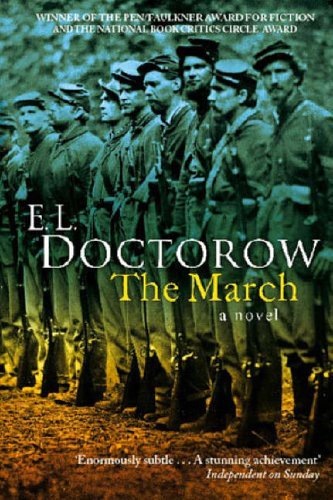 This is a book that people mention in connection with the American Civil War. Pat Turner was the first and his friend Tom the Artist was the second. I was coming down from Battle Cry of Freedom – and this was in a sense the novelistic version of that work of history.
E.L. Doctorow is a writer that clever people seem to like. For example he’s one of President Obama’s favorite authors. For me though, he’s rather problematic. I’m not sure why, but the couple of his books I’ve read – The Book of Daniel about the communists who were executed; and the one about the rag-time era – were not memorable. I found them dry. And it was the same here until about one third of the way through.
The turning point was a comment from Pat that seemed to unlock Doctorow’s work. I was saying I didn’t much like Doctorow, when Pat said, ‘that’s funny because he’s popular with historians – they say he’s very accurate.’ And that, I think, is the key to Doctorow: he’s a historian who converts material into figurines and then sets them loose in a novel. The effect is like a living museum.
The story is the march of General Sherman and his 60,000 troops through Georgia and the Carolinas at the triumphant end of the Civil War. By this stage the Union was winning every battle. The March tells the stories of freed slaves, Southern belles, army surgeons and confederate flops all tagging along for the ride in an atmosphere of grief, excitement and adventure. The thrill for the reader is, precisely, knowing that it’s all pretty accurate – that this, more or less, is how it really happened at that epochal time.
The cast is large and takes in many characters that made their mark, as well as some famous moments in the war – notably when the Union burst into South Carolina (the chief culprit in the break from the Union) in a mood of vengeance; or when Abe Lincoln was assassinated outside the theatre. On The March itself, all was calm, settled, civilized – the army was in a groove – but in between, regrouping in the towns, there was often drunken mayhem.
I enjoyed it a lot – and I may decide to re-read Ragtime.

 Book Reviews by Nathan Bronx