Revolution in the Head

The Beatles’ Records and the Sixties

Ian MacDonald

519BBYDDSXL._SX374_BO1,204,203,200_Revolution in the Head, first published in 1980, has been on my shelf for several years, so what led me to it now? I can’t tell you, but I knew it was mine. I didn’t want to read fiction, or Knausgaard, or psychiatry, or animal behavior, or any of my usual bollocks, so I picked this volume of Beatles songs analysis – a famous, famous pop music book – with a big odd shape and a psychedelic cover like a Beatles album or a Monty Python annual. I took it and collapsed on the kitchen sofa and went into a dream.

MacDonald’s writing is equal to the music. That’s Point One. He insists in the introduction that he will not prostrate himself, but then he charmingly admits that, yes, of course, he is a huge fan of the Beatles. Which won me over. And then he tells the story through the songs – and in a way that is just so interesting at every turn.

Paul McCartney’s songs generally reflected his cheerful personality, not only in the lyric but also in the melody, which MacDonald describes as “vertical” in its jumping up and down the scales. McCartney wrote great tunes. Lennon’s by contrast were “horizontal” – notes close together, sometimes a lot of the same note – reflecting his dislike of the cheap and easy. MacDonald makes the point that Lennon valued emotional truth over form (I thought of DH Lawrence). McCartney, however, under Lennon’s influence, wrote some gritty songs. We Can Work it Out was an early example. Getting Better was a later one – a song I’d always thought was Lennon’s.

McCartney was “the great multi-instrumentalist”, according to McDonald, not only one of the great bassists, but also a great guitarist and drummer and genius arranger. He was a far better musician than Lennon who (perhaps to his advantage) was actually a clumsy guitarist. Lennon was probably the greater artist, though, and abrasive and sardonic and endearingly silly. He was a big fan of Peter Sellars and Spike Milligan – he loved how they were sending up The Establishment. MacDonald is good both on George Harrison, the most complex Beatle, a mate of Bob Dylan, and on Ringo Starr, dispelling the myth that Starr was not a great drummer.

In any case, MacDonald views all the music that the individual Beatles made post-divorce as hugely inferior to what they made together. The creative power was in the relationships.

Abbey Road was my own introduction to The Beatles. Jonny Landau gave it to our family as a present around 1971 and it was the only Beatles record my parents ever owned. It was the only pop music they ever owned. Mostly they went for musicals, like Oklahoma, South Pacific, Guys and Dolls, West Side Story, Hair, Godspell, Jesus Christ Superstar, Joseph and the Amazing Technicolor Dreamcoat, Cabaret, the soundtrack from The Sting, and Chicago and Evita, not to mention South African musicals like King Kong and Ipi Tombi, or else for singers like Frank Sinatra (especially) or Louis Armstrong or Harry Belafonte.

However they did have this one proper record, in Abbey Road, and often played it. Or at least Ted did (Gill seldom put on any record, unless she was doing exercises). Songs like Octopus’s Garden and Maxwell’s Silver Hammer were vital to our childhoods. So was Come Together, which McDonald extols, though as a kid (and even now) I found it quite dark, even scary. In any case, Abbey Road is my link to that period, conjuring images of Jonny Landau with his beard, his chums and his dates; Lindsay and Philippa with their books and Frisbees; Marna and her heavy-smoking husband, who actually hung out with the Pythons; Bernard Kops, the playwright, pulling funny faces in the playground at George Elliot; and our teacher at Fitzjohn’s Primary, Sandy Brownjohn, playing Beatles songs on her guitar and telling the class, ‘This is real music, not like the stuff you listen to’ (by which she meant Abba and Slade and Paper Lace.)

Picture us bumping along Finchley Road in the old Saab as Ted bursts into the opening lines of You Never Give Me your Money – before quickly fading into the rehearsal of a good joke, its punchline not quite audible, as we kids jostle in the back.

MacDonald identifies Revolver and Sergeant Pepper as the peak of the Beatles’ creativity. He describes an amazing scene: the Beatles blasting out Sergeant Pepper on a record player, early one morning in West London, just after they made it in 1967. He notes the convulsion that album caused. Some commentator at the time called it “a key moment in western civilization”. The Beatles and the Sixties were both cause and effect. Their ability to tap the spirit of The Sixties had many folks feeling that “they knew” – that the Beatles were holy men who could foresee everything.

It helps to understand that the Beatles – especially Lennon – were heavily into LSD by the mid-Sixties. They’d graduated from booze and speed to cannabis (their first joint rolled by Bob Dylan) before being swept away on the free-your-mind zeitgeist. MacDonald does not exult the LSD and he emphasises how close Lennon came to going nuts.

As he goes through the songs, one by one, which is the structure of this book, MacDonald devotes extra pages to I saw her standing there (Lennon/McCartney); Rock and Roll Music (Berry); Here, There and Everywhere (McCartney); She Said She Said (Lennon); A Day In The Life (Lennon/McCartney); I am the Walrus (Lennon); and Revolution 9 (Lennon). But those are just the ones that stick in my mind. As I heard Jarvis Cocker saying on the radio, the Beatles wrote so many great songs and so few duds.

Of all the Beatle moods – amorous, whimsical, trippy etc. – the one I like best is the rock ‘n’ roll mood. That feels like the essence of the band: songs like Twist and Shout or Back in the USSR. Here’s a playground memory from 1975: two of my classmates, Lawrence Hopkinson and Andrew Hall, are dancing on a bench, belting out Beatles songs (very well) as a group of girls surround them and scream like true fans (very well). I’m admiring from the sidelines, I’d like to be up there.

Yeah! Yeah! Yeah!
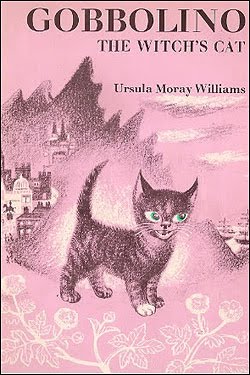
Gobbolino The Witch’s Cat

Ursula Moray Williams

I’ve been cea13-gobbolinomeaning to read this book for 46 years and now here I am reading it and falling asleep.
When we joined Fitzjohn’s Primary School, in 1970, my sister Nicki’s class read Gobbolino and my class read Adventures of the Little Wooden Horse. Both books were by Ursula Moray Williams – published in 1942 and 1939 respectively. Little Wooden Horse was a captivating story, set in the villages and forests of somewhere in Europe. As for Gobbolino, I remember that Nicki, then aged 5, was swept up – initiated to some kind of magical world that, for a while, took her over completely.

So now, all this time later, my younger daughter, Alice, and I are in bed with Gobbolino, reading Nicki’s original copy – a lightweight Puffin paperback. It’s got the sweetest little pink cover. See above. It’s taken work to bring Alice round to this. She must have rejected the book about a dozen times. Then suddenly she agrees – with no rhyme or reason. And now my voice trails off and the book wriggles out of my hands and Alice is pushing my shoulder. ‘Dad! Keep reading!’

One day, when I’m an old man, not long from now, in the flap of a butterfly’s wings, I could look back on this as the happiest of times – falling asleep with a book and a daughter.

Another scene: It’s dawn – a September morning. I’m writing in my little East-facing office, enjoying the peace. My routine, ever since the summer holiday: Get up at five. Make a Nescafe. Write and putter. It’s good for the soul. By the kids’ bed-time, however, I’m rather sleepy.

Gobbolino is a little cat born into the wrong family. From the moment he can think, as he tumbles out of the family cavern, he knows he isn’t meant to be a witch’s cat. No, he wants to be a kitchen cat. His idea of happiness is a warm hearth, a cozy armchair, and a kindly master. He’s not keen on his mistress, a conventional witch on a broom, nor in step with his mother, Grimalkin, or his sister, Sootica. Both are regular witch’s cats. Gobbolino also has some physical incongruities. Instead of being completely black, he has a white paw. And instead of green eyes he has brilliant blue eyes. Consequently, every witch in the Hurricane Mountains rejects him for an apprenticeship. Poor Gobbolino is abandoned on a hillside. He cries for a while – and then it comes to him: “He could go out into the world whenever he pleased and find a happy home to live in for ever and ever.”

The sky has turned pink. Outside my office window are two rows of small, urban gardens. Not so long ago, these were back yards, overflowing with children from large Irish families. But this is a gentrified neighborhood. Now each family has exactly two kids. And the gardens are works of art. Except next door. Next door has four kids instead of two and a briar patch for a garden. A different kind of art! An installation of exuberant brambles! Thrusting skywards, pushing the fences, straining to get out. This little box of wilderness is strangely compelling.

And it’s where the foxes live.

Gobbolino never has trouble finding new owners. For him that’s the easy part. The difficult part is getting people to keep him! Pretty soon, he always gets cast out: By the farmer’s wife; by the orphanage; by the Lord Mayor’s wife; by the Cat Maniac; by the Merchant Seamen; by the Little Princess; by the Travelling Showman; by the Girl in the Tower; and by the Woodcutter’s Grand-daughter. The problem is that Gobbolino can talk. The problem is that sparks fly out his ears. Sparks fly off his fur. He has a number of  such odd behaviours. Result: there’s always someone denouncing him for a witch’s cat. And then poor Gobbolino must say goodbye, dust himself off, and once again, hit the forest path.

Two things about Gobbolino: One, he is a cat of great integrity. You need to read the book to understand this. Two, he has very little self-pity. Feeling sorry for himself is not Gobbolino’s style. In this regard, he’s a great example of how to live.

In our home, we have no pets – not since I returned the stick insects to the pet shop – but we do have wildlife! There’s a queue of goldfinches at the seed-feeders. There are sparrows, blue tits, robin red breasts and wood pigeons, blackbirds (the best singers) and magpies (the cleverest) and squirrels burying nuts.

But the foxes! Ah! The foxes! They are magical.

The Woodcutter’s Granddaughter, a vain, ungrateful girl, sells Gobbolino to a peddler woman, who traffics him back to the Hurricane Mountains. Now what? Gobbolino is back to Square One. He is reunited with his sister, Sootica, in the homestead of another witch. But here’s drama! Gobbolino stops co-operating! He sabotages the nasty projects of his nasty new mistress. In revenge the witch casts a spell on Gobbolino: She turns him into a kitchen cat!

6-45 a.m.: As we arrive in our kitchen for breakfast, we run straight into the foxes. Two of them: A mother and a cub. Staring right through the glass of the patio doors. They are healthy, glossy, sharply defined – as vivid as a pair of tigers. The mother springs onto our garden table. Millie starts filming with her iPhone. Now the mother is chasing the cub round the garden. Faster and faster they run. Sparks are flying. Flying off the cub’s ears and fur. A trail of bright orange sparks falling over the lawn. Suddenly the foxes stop. The cub ducks beneath the fence. Into the briar patch. The mother yawns, scratches her neck with a hind paw, picks up a tennis ball.

The witch takes away Gobbolino’s magic: his sparks and his power of language. Gobbolino doesn’t mind, for now he is easier to accept. Cast out again, he soon finds the happy hearth he always wanted. I read the final words, close the pink cover. ‘Well, what did you think?’ I ask Alice. ‘Good,’ she says. I say, ‘Shall I read about the lady who wrote it? She sounds very cool.’ ‘No,’ says Alice.

PSYCHIATRY Past, Present and Future

Sidney Bloch, Stephen Green and Jeremy Holmes

9780199638963This book appeared in a review by Lady Elaine Murphy of the House of Lords. She’d loved it. She called it “not a series of academic reviews but more the experience and wisdom gleaned during successful careers”. To me that sounded very cool. I was looking forward to some old shrinks reminiscing – bragging a bit of course, but also spilling the beans, admitting perhaps, with a touch of personal regret, to psychiatry’s many delusions and dead ends.
Gossip can be so educational.

I was hoping for a book a bit like Hellmann and Talmud’s “Ideally Speaking”. That’s a series of interviews with Jewish South Africans, in which 44 individuals look back on their lives to say how South Africa affected them – and what they did with their time on the planet. The baby-boomers in question (plus older siblings) were living in Israel, or Britain or America or Australia, or still in South Africa, and as usual with Jewish South Africans – I can vouch for this community, it’s the one I came from – they had plenty to say.

As it happens, “Psychiatry – Past, Present and Future” was exactly what Murphy said it wasn’t. It was a series of academic reviews! Expert doctor rehashes tired old lecture. Plus it came in tiny print with a drab grey cover. Not fair!

What was Lady Murphy thinking? Or after a day in the House of Lords does anything else seem interesting?

To be honest, I’ve had it with this type of reading material. I’m totally jaundiced. My bilirubin is a million.

Nevertheless I persisted – force of habit maybe – hacking my way through an academic briar patch that would have put off Br’er Rabbit (and he was born in a briar patch). The best was a review of cognitive therapy by its inventor, the American Aaron Beck. Another on psychodynamic psychiatry wasn’t bad – by Jeremy Holmes, the English go-to guy on the subject. And there was a thing on PTSD by an Israeli, Arieh Shalev, which was actually quite interesting. I’m trying to be reasonable here.

Funnily enough, there was one person who – Zelig like – appeared in both the psychiatry book and the South Africans book! That was Sidney Bloch, a Jewish South African psychiatrist now based in Melbourne. In the textbook, he gives a rather dry lecture on ethics in psychiatry. But in the memoirs he is fascinating. Firstly he talks about how he got into ethics, in the 1970s, through exposing the abuses of Soviet psychiatry. Then he talks about what it means to be a moral bystander: not in denial, but not doing much. Which is a pretty common kind of scenario generally.

Bloch remembers the fervour his youth group had for migrating to Israel, when they might instead have focussed on the local South African horrors. He recalls all the food they used to chuck away at summer camp, while so many people in the area were hungry. He describes too his recent attempts at reconciliation, when he tried to reconnect with old medical school alumni. One black doctor (blacks were segregated at his medical school) tells him, ‘It’s too late. You had your chance and missed it.’ Then an Afrikaner doctor (one of a small minority at that med. school) pours scorn on Bloch by saying, ‘We did more than you did, just by staying.’ But whatever the harsh truths, the interview is riveting, like many in “Ideally Speaking”.

By the time I got to child psychiatry – my own field – by the great Professor Sir Michael Rutter, I was ready to throw in the towel. I didn’t want to feel stupider than I already felt, so I junked it.

I’ll tell you about a good psychiatry book: George Vaillant’s “The Ego and Its Defense Mechanisms”. Despite its forbidding title, this book is a humdinger, dealing with human lives and the amazing ways they pan out. Vaillant, an American, draws on his own longitudinal (across many years) studies of (i) boys born into poverty and (ii) elite students at Harvard. Some of the kids in poverty overcome bad starts, even low IQ, to become pillars of their community. Some of the elite students lose the thread of their own lives. How does this happen?

Vaillant relates the lives of his subjects to the kinds of defence mechanisms they’ve used during those lives. In the process, we learn about defence mechanisms: their nature (unconscious), their purpose (to protect the mind from anxiety) their effectiveness (some better than others) and their maturation (usually in the cocoon of good, supportive relationships).

I don’t really like Freudian thinking, but defence mechanisms at least make sense to me. Reading Vaillant, I began to think of the mind as an octopus. A weird, amorphous animal, the octopus has an astonishing variety of defences. It can retreat into a crevice. It can squirt ink at you. It can poison you. It can swim away at top speed. It can tiptoe away on its tentacles. It can mimic other animals like fishes by swimming in an affected way. And similarly – if you’ll bear with me – the human mind can resort to the weirdest manoeuvres.

Anything but feel lost, or afraid, or rejected.

The Disappearance of Childhood

Neil Postman

1896-square-1536I came across Neil Postman at my cousin Jeremy’s flat in Johannesburg. I was living there in 1996. Postman’s “Amusing Ourselves to Death” was one of Jem’s favourite books – so I read it too. Jem would often use the title, with a twinkle, as a catchphrase for Johannesburg’s nightlife.
In fact “Amusing Ourselves to Death” (published 1985) is a book about television. It’s especially about how television degrades our culture. The main thing, says Postman, is that TV trivialises all it touches. It’s a medium that lends itself to entertainment, which is fine for sitcoms and dramas, he says, but no good for serious stuff. The news, for example, arrives like a piece of razzmatazz. Tragic and comic items are presented in an unrelated way, so that it’s impossible to properly respond. The underlying message is always: This stuff doesn’t really matter.

There was a news satire in the UK called “The Day Today” (Chris Morris and Armando Ianucci, 1994) that got this really well: the dramatic music that went on just a bit too long, the graphics that were just a bit too elaborate.

Our political culture, Postman argues, has had to adapt to television (with the advent of sound bites etc.) and the result has been the death of proper public debate and public engagement.

I read “Amusing Ourselves to Death” on Jem’s balcony – with the city of Joburg all lit up and sparkling below. Postman’s text was luminous too. He’s a wonderful, conversational type of writer.

Jem’s flat was in an art deco block called Beryl Court, which stands on a hill in the suburb of Troyeville. He and a group of his friends had bought flats in this block in the early 1990s. It was a communal type of place – Beryl – with folks always visiting each other. The brick red, open-air walkways on the inner side of the building had a South African floor-polish smell – they overlooked a sunny car park in which laundry got washed and dried – but the flats, which were small and perfect, all looked the other way: North over the Bez Valley or West towards the City.

Postman’s voice stayed with me, but only lately did I read “The Disappearance of Childhood” (published 1982). Here Postman argues that (thanks to TV, again) childhood has had its day! Childhood, he says, is not a real thing anyway. Apart from infancy (which is clearly biological) it’s just an idea or a social role. And now that idea is obsolescent.

Before the printing press came along (C15), he says, children dressed like adults, did the same things as adults, and were exposed to all of adulthood’s violence and sexuality. Grown-ups, on the other hand, were rather child-like. Most people (even clerical scribes) were illiterate. There wasn’t really anything grown-ups knew that children didn’t know – so why make a big distinction?

But the printing press meant books became widespread. For the first time since classical times, there was social literacy. And book learning by its very nature created stages of development. Now there was a need for schools and universities. The advent of schools created a need for childhood. Society responded by making children more visibly different.

Postman sees the idea of childhood as one of the great achievements of civilisation. With it came the idea of protecting and nurturing and even celebrating children. But then came electricity, the telegraph, the radio and, finally, television. And TV meant a shift in the culture from one that reads to one that watches. Postman sees this as profound. Writing is conceptual and propositional. It lines up a train of thought for the reader to follow, understand and agree with or disagree with. But with TV no such thought is needed. It’s all sensation and emotion. A child can watch TV just as well as an adult can.

The stage is set for the demise of childhood. This is what Postman thinks is happening. The dividing line between childhood and adulthood has blurred. Now children wear the same clothes as adults. They know all the secrets of the adult world (sex, violence and stupidity), they have lost their manners (due to the loss of hierarchy), and their serious crime rate has risen a thousand-fold. Adults meanwhile have grown childish. They value emotions above propositions, they are dominated by advertising, and they are narcissistic etc. And remember Postman wrote all this 35 years ago! The world of 2017 does not rebut his analysis.

My own childhood took place in London – in Golders Green then Hampstead. My cousin Jeremy grew up in Maritzburg in Natal. Our mutual grandfather, Cecil, grew up right on the streets of Troyeville, around Beryl Court, in the 1910s and 20s. He was the second youngest of 7 brothers and a sister – and they all helped their mother (Annie) run her grocery store. Cecil was bookish – and excelled at Latin. Television did not start in South Africa until 1976, just five years before he died.


Horrid Henry and the Abominable Snowman

Francesca Simon (illustrated by Tony Ross)

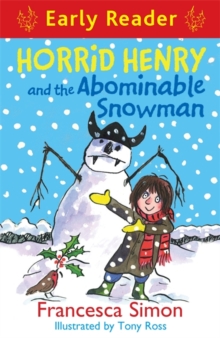
HH-Abominable-Snowman-ER-9781444009095Horrid Henry was Alice’s school reading book for the week. She and I had just started reading Roald Dahl’s BFG together, so we alternated between the two: she read then I read. Nice.
The Horrid Henry series is all over us these days: beginner books, more advanced books, a TV cartoon – maybe a movie for all I know.

And actually they’re very good!

The reason is the character of Horrid Henry is very convincing. He’s a kid at odds with his parents; at war with his younger sibling (Perfect Peter); despised by his teachers; unpleasant to his neighbours; selfish and scheming – and given to great tantrums when things don’t go his way. Yet, he’s also treated quite unfairly.

This is something that kids seem to understand quite easily. Alice and Millie have always seemed to empathise more with Henry than with his cooperative and reasonable brother. But until I read this book (which incidentally is laugh-out-loud funny) I’d always seen Henry as a bit of a prick.

Alice and I discuss the issues confronting Horrid Henry:
Me: ‘He needs some time away from his brother. He only bothers Peter because he’s so bored.’
Alice: ‘Yes, like Millie bothers me.’
Me: ‘Maybe he’d be nicer to Peter if he had more to do?’
Alice: ‘His parents are really mean to him.’
Me: ‘Yes, they’re always sending him to his room.’
Alice: ‘And Peter’s always telling on him.’ (It’s true: Peter has an extremely low threshold for calling his mother.) ‘I don’t do that with Millie.’ (Well, that’s kind of true.)

The general rule is things don’t go well for Henry. He wants to make the best snowman, and to this end he vandalises Peter’s snowman, but somehow, inevitably, Peter gets the Snowman Prize. Henry’s howl of grief is terrible. The failure! The defeat! The rejection! The suffering that comes with having a bad reputation!

Now Henry’s favourite author is visiting his school. Henry is so excited – he’s dying to meet the author. You see, Henry has enthusiasms! It’s only a matter of time, though, before things go pear-shaped. Henry gets sent out the class at the key moment – just as the author is about to arrive. And it’s not even his fault! This time he has enough chutzpah to talk his way back to the lesson. For though he suffers, Henry is never completely defeated.

In child psychiatric terms, Henry suffers from Oppositional Defiant Disorder (ODD). In this he differs from his predecessors – say Richmal Crompton’s William or Mark Twain’s Huckleberry Finn – who were merely naughty. Huckleberry Finn did not have tantrums! He deals with his drunken dad – oh yes – he ties him up with rope and scarpers! Forever! As for William, his world scarcely overlaps with the adult world at all. Most of the time he’s careening round the woods and villages with his pals. Horrid Henry, though, won’t be floating down the Mississippi anytime soon. For he is stuck – in the modern world of TV, traffic, parenting and limited space. He’s dealing with the grown-ups – he has to contest every inch of their world. It’s more like a Tom and Jerry type of situation.

Do Millie and Alice see any of themselves in Henry and Peter? They don’t seem to. They watch Henry’s antics with wry amusement, but in the end they both seem to take his side.

Just Help Yourself

Philip Hancock

We’ve been renovating the house again. In the week before our summer holiday both Phil the Painter and Gary Small Jobs are around – mostly at different times. The thing about Phil the Painter is he’s also a poet. Just Help Yourself is his second pamphlet. His first pamphlet, he tells me, was a Guardian choice for book of the year. The thing about Gary, apart from his facility for fixing things, quickly and cleverly, is his lovely, easy-going spirit, not to mention his perplexing, frustrating, wonderful refusal to charge proper money for the work he does.

They cross paths only once – on our street – as Gary arrives in his flash new van (that I encouraged him to buy) and Phil is leaving with his bag of overalls and brushes. To my surprise and disappointment Gary launches into a routine about how easy it is to paint – and why he mostly won’t paint, even though he’s very good at it. To illustrate his point in a manly way – once he’s made sure Alice is not watching – he pretends to unzip his fly. Painting is as easy as taking a piss. Phil smiles, quick as a flash replies, ‘Yes, and if you’re not careful, you’ll pee all over the seat as well.’

By this I learn that Phil is accustomed to bullshit and bravado and can defend himself in the classiest way – with humor. His poems do the same. Mostly they are poems about physical work – and mostly they are imbued with a great, warm, dry, affectionate and sometimes – my favorite – even slapstick sense of humor.

Each poem fits on one page of the pamphlet. Each has a little story to tell. And like the work it describes, each is down-to-earth and built for a purpose. In The Great Concert Hall a work crew makes repairs while entertained by stories of the merchant navy and rehearsing their social lives. In Over 21s a young man borrows his father’s garish dinner jacket to get into a nightclub. In Ladsanddads an older man drives up to the football pitches and wonders whether, given a bit more encouragement, he might have made a decent player. In Woodruff & Sons some kids trespass on a waste disposal site. In Half Day a man absconds from his office job to lay some flagstones at his own home. In Inside Job a decorator stumbles on his female employer’s stash of nude photographs. Martini Man is about a Lothario who has it off with women in the back of his messy work van. Perks is about nicking stuff from the workplace and Friday, one of the funniest poems, is about a group of workmen smashing up televisions.

Many of the poems are quite practical – such as To Carry A Ladder, which lays down specific instructions: Run it up to the sky on its heel / Get a shoulder under it – take the weight, / and feel for the point of balance. Others are about work politics. Double Take describes a youngster’s embarrassment at meeting his boss while out shopping (in Lewis’s, the sales/ You pray he’s not seen you, / riffle the clothes rail.) Another, Knowing one’s Place, talks about a young man trying to conceal his growing interest in books: After the miles behind, / the years catching up, / I’m on that beach with Meursault, / the sun of Algiers unforgiving…

The last poem, A Year On, is a poignant one. A guy is helping a lady through the anniversary of the end of a relationship. We don’t know what went wrong – something did – but he is gently encouraging her to throw out the junk, move on, buy herself some nice new clothes: I point out smart heels in Ravel, / catch her giggle in the window, / Benetton colors jazz her up: / she’s still got the figure, / sod the neighbours. You feel involved. Or how about this one?…

A Drink with the Captain
After lunch the apprentices egg him on.
Last week it was the Magellan Strait,
that one where the kitten grew and grew,
prowled the deck. Davy’s hat. No Davy.
Today it’s Madgascar: the merchant ship
off course, torpedoes, sharks,
One sweep of his freckled hand:
I knew exactly what to do. Later he’d sipped
malt matured in sherry casks with the Captain.
Rain pummels our Portakabin.
Through the window, the backs of the estate:
missing tiles, peeling windows, dogs,
still over an hour before we can go.

After Phil leaves I make lunch for Gary – and Millie, Alice and their several friends. It’s summer. The girls eat on the verandah – fried eggs, toast and olives. Gary and I are eating in the kitchen. I give him Phil’s poems to read. Maybe they’ll tickle him. But no, he won’t even pretend. They’re not his cup of tea.

Fair enough – but they are very much my cup of tea: poetry I can understand and enjoy, free of rhymes, full of rhythm, bursting with emotion recollected in tranquility. Nice job, Phil. I’m grateful.

For more information or to buy Phil’s pamphlet click here

Neverhome

Laird Hunt

Neverhome-coverI’ve been looking for a book about the American civil war for ages, not finding one, and then this came along – an off-beat-sounding piece of fiction about a woman who disguises herself as a man – and goes off to fight. It was brilliant.

The narrator, Ash Thompson, later known as Gallant Ash (after she gives her jacket to a girl with torn skirts), is a small, tough married woman. She begins her story like this: “I was strong and he was not, so it was me went to war to defend the Republic.”

Later she elaborates: “There was one of us had to look to the farm and one had to go and that was him and that was me. We were about the same small size but he was made out of wool and I was made out of wire. He took the sick headache every winter and I’d never got sick one grey day in my life. He couldn’t see too well over a distance and I could shut one eye and shoot a jackrabbit out its ears at fifty yards. He would turn away any time he could, and I never, ever backed down.”

The language is stunning, beautiful, rich and poetical – like the language of Huckleberry Finn.

The story spins out cleverly. As the war proceeds, you learn about the past of Gallant Ash. You begin to understand why she’s so tough and ready to fight. It’s to do with her mother. You also realize that, although she’s a brutally honest gal, Gallant Ash may have a blind spot or two. When her fellow soldiers accuse her of stealing their rations, it all sounds terribly unfair, but eventually she’ll come clean to the reader.

After fighting bravely in a couple of gruesome battles, Gallant Ash finds herself recuperating at the home of a nurse – a widow – who falls in love with her. When Ash insists on returning to the fight, the nurse betrays her to the army who, for reasons we don’t understand, puts her in a brutal psychiatric prison. The rest is a journey home, culminating in a tragedy.

Reading Neverhome, I thought of a book called Muzukuru about the bush war in Rhodesia – an epic story, bursting with South African lingo (‘goffels’ and ‘putting foot’ and ‘I chune you’ etc.) that I plucked off Jeremy Nathan’s shelf at Beryl Court in 1996 and relished.

Then, as I was walking through Lerici (I read Neverhome and am writing this review in Italy) I realized that I could relate Gallant Ash, almost perfectly, to my ex-girlfriend Carletta. Not only that but I could relate myself to Ash’s husband Bartholomew.

Carletta had a background like Gallant Ash’s and the same kind of toughness – also the same kind of tenderness and the same kind of charm. And she had this talent for mimicry. She could take off people’s walks and their funny faces – and she did it from the inside out. Sometimes she had me in hysterics. And then there was her grace, her warmth, her raucous voice, the boyish way she moved and sat, her empathy for the kid at the Sainsbury counter (“Porello!”), her willingness to fight (pugnacity is just the word) and her streak of Roman craziness. It was all very Gallant Ash

The defining moment in our relationship, though, was the Portobello Road incident. It’s to there that I must return! Carletta, her sister Ilaria and a male friend (name forgotten) were having a beer outside a pub on Portobello Road when a large, drunk, Sudanese man started bothering them. That was before I arrived – and when I did things got worse. The Sudanese guy lumbered up to us, too close, and I pushed him away. He offered some incoherent curses. Next thing, Carletta throws her beer bottle at the brother. Then he punches me. We take off, at my instigation, but the man – a drunken, stumbling idiot really – pursues us and reappears by Ladbroke Grove tube station. Now there’s a situation: the drunk Sudanese is stumbling after me – his main enemy – while I’m backing away in large circles. A small crowd of young black men is watching disinterestedly, and Carletta is shouting at me in Italian: Defend yourself! Eventually, sick of my retreating, she takes up the fight herself – and receives a couple of hard kicks in her side. We slope off homeward with our injuries, trying to figure out what’s just happened. It’s clear, though, that Carletta is not only hurt but also embarrassed.

‘Why didn’t you hit him? He was attacking you! ‘

Because I didn’t want to get hurt? Because he was bigger than I was? Because he was an idiot? Because there was nothing at stake? But Carletta is hurt and ashamed, and so there’s some of this shame is mine too, however pretty my reasons.

Another conversation: ‘It’s not how big you are,’ Carletta tells me, ‘it’s how mad you’re prepared to get.’ That’s Carletta – a hardhead who won’t back down. Like the private in From Here to Eternity. Like Gallant Ash fighting her Civil War.

But it was a great book!

The Next Next Level

Leon Neyfakh

the-next-next-level-grey-235x300Juiceboxxx is talking to his audience. “What we’re gonna do right now,” he says, “is we’re gonna go to that place called the next level. How many of you motherfuckers know about that? That next level…that’s what your fuckin’ parents warned you about. That’s what your teachers warned you about. That’s what your local city alderman warned you about! They said, ‘Hey man, don’t go to that next level, ‘cuz if you go to that next level, you’re never gonna come back!’”
Juiceboxxx jumps around, the audience screams. “Well, I’m here to tell you folks, that tonight, and only tonight, at the Passion Lounge in Brooklyn, New York, not only are we gonna go to the next level, we’re gonna go to the level above the next level. That’s right, ladies and gentlemen, we’re going to the NEXT NEXT LEVEL! Who’s with me?”

Juiceboxxx is a not-so-successful white rap artist approaching thirty who has pursued his art since a teenager. The author is a journalist of the same age who has followed Juiceboxxx from afar – ever since seeing him perform in a church in suburban Chicago when they were both 16.

The ‘next level’ is a metaphor for Juiceboxxx’s career. At this point, having struggled for so many years – sleeping on sofas, performing for tiny audiences – Juiceboxxx is trying to figure out a way to get to the next level. He’s thinking he needs to branch out, maybe broaden his music, get a bit more poppy, distance himself in a way from some of the ‘noise’ musicians with whom he’s been fraternising and identifying all these years.

But Juiceboxxx is committed to what he does – the music and the movement and his friends – in a deep and mysterious way, so moving on is not straightforward. The author is there to document what happens.

It’s a fascinating book that raises big questions: What is art? Why do some people devote their lives to making it? What makes those people different to other people, like the author, who wish they could make art, but in the end are content to enjoy art, write about it, pursue their professions – and fall into the category of “critics”?

Juiceboxxx doesn’t fully understand why he does what he does. He’s aware of the price that he pays, the grind of it, but he doesn’t want to stop. He likes touring. He likes putting his life into words. As Neyfakh explains, ‘Watching him from three feet away as he plays through the glorious “21 on the 101”, I see a guy who has successfully turned the raw materials of his life into art that will prove timeless – if not for a million people, then at least for me, and for Willy, and for lots of others who love Juiceboxxx and would be devastated if he ever gave up.”

Neyfakh is a kind, smart young writer. He adores Juiceboxxx, he loves what Juiceboxxx does – he is dying to have a bit of what Juiceboxx has – and there’s a kind of embarrassment to these feelings that he conveys very well. His own parents are Russian Jewish immigrants to America. He embraces American popular culture in a way they cannot understand. And so you get a beautiful mix of his own story, plus thoughts about art, plus the drama of his burgeoning relationship with Juiceboxxx, who has agreed to a series of interviews.

It was a short, gripping book that shone a light on my own life. Unlike Neyfakh, who seems to have concluded at age 30 that he will never be an artist, I have continued to nurture that fantasy. This book did nothing to dispel that. It only intensified the yearning to make something of my own.

It’s terrible to have those feelings and not find the courage to embrace them and act on them.

The paradox of The Next Next Level – one that Neyfakh is far too humble and modest to notice – is that in writing a book of such brilliance he has created a wonderful work of art.

The March

E.L. Doctorow

the-march4This is a book that people mention in connection with the American Civil War. Pat Turner was the first and his friend Tom the Artist was the second. I was coming down from Battle Cry of Freedom – and this was in a sense the novelistic version of that work of history.
E.L. Doctorow is a writer that clever people seem to like. For example he’s one of President Obama’s favorite authors. For me though, he’s rather problematic. I’m not sure why, but the couple of his books I’ve read – The Book of Daniel about the communists who were executed; and the one about the rag-time era – were not memorable. I found them dry. And it was the same here until about one third of the way through.

The turning point was a comment from Pat that seemed to unlock Doctorow’s work. I was saying I didn’t much like Doctorow, when Pat said, ‘that’s funny because he’s popular with historians – they say he’s very accurate.’ And that, I think, is the key to Doctorow: he’s a historian who converts material into figurines and then sets them loose in a novel. The effect is like a living museum.

The story is the march of General Sherman and his 60,000 troops through Georgia and the Carolinas at the triumphant end of the Civil War. By this stage the Union was winning every battle. The March tells the stories of freed slaves, Southern belles, army surgeons and confederate flops all tagging along for the ride in an atmosphere of grief, excitement and adventure. The thrill for the reader is, precisely, knowing that it’s all pretty accurate – that this, more or less, is how it really happened at that epochal time.

The cast is large and takes in many characters that made their mark, as well as some famous moments in the war – notably when the Union burst into South Carolina (the chief culprit in the break from the Union) in a mood of vengeance; or when Abe Lincoln was assassinated outside the theatre. On The March itself, all was calm, settled, civilized – the army was in a groove – but in between, regrouping in the towns, there was often drunken mayhem.

I enjoyed it a lot – and I may decide to re-read Ragtime.

Some Rain Must Fall

Karl Ove Knausgaard

9780099590187What do people talk about when they talk about Karl Ove Knausgaard?

I’m on the phone to Jonny Landau in Jerusalem – a summer’s day. I ask him about the latest Knausgaard, Some Rain Must Fall, the one I haven’t yet read. Was it good as the last one? ‘Not as good!’ he says, ‘But anyway, Knausgaard is a genius. He’s done something totally new. There’s Philip Roth. He did something new. And now there’s Knausgaard.’

So those two writers belong together?

And here I am on Christchurch Hill with David Landau. It’s a winter’s evening and we’re heading to the Duke of Hamilton – and talking about Some Rain Must Fall.

Jonny, David and I are a Knausgaard circle.

‘There was a bit that reminded me of you,’ says David. But I never get to learn what bit! The conversation carries us away. ‘I had this realisation,’ says David, ‘I’m not like Knausgaard! That was it! And it was amazing. It was a relief. Knowing I didn’t have to go through all that!‘

I think he means go through all that emotionality – or that obsession with describing the world. But do those two things really go together? Or are they just a coincidence in Knausgaard?

I know what reminded me most of me. It was the bit where Knausgaard realizes that no job he took – and however high he rose in it – could possibly fulfill him as much as writing. I once reached the same conclusion about medicine. That I’d rather fail as a writer than succeed as a doctor. What a formulation! And yet I stayed in the clinic.

David seems to believe that, for all the brilliance of his writing, Knausgaard is basically an asshole. But I cannot get my head round this. OK, here is a guy who can cut his own face, who can cry his eyes out over a rejection – a guy who goes on alcoholic sprees and remembers nothing afterwards. Yes, he often acts like an asshole – but does that make him one?

And if he is an asshole what does that make me? I’d have to be an even bigger asshole than Knausgaard.

There again, here’s a guy – Knausgaard – who can walk away from a woman he loves and not think about her again. This is something different – what he calls the “piece of flint” in his soul. ‘And that was how I left Bergen,’ he says – the last line of the book. Stunning! But so weird!

The book is full of insights, and since the subject is becoming a writer, the insights are riveting. ‘You can write whatever you like,’ Knausgaard discovers, ‘so long as you make it interesting.’

Now I’m at the Gypsy Queen in Gospel Oak. I’m with Pat Turner’s friends Ben the Museum Guy and Tom the Artist – and with Tom’s girlfriend, Juliet the Bookseller. ‘I recall you’re big into Knausgaard,’ she says. Yep, I sure am. And dying to discuss Some Rain Must Fall with someone. ‘But isn’t everyone discussing it?’ she asks. Well, maybe in her world – maybe in the book world – but not in the world of psychiatry. Come to mention it, Tom the Artist hasn’t read Knausgaard either. As for Ben, he may have read a third of the first book – enough to propel him deep into discussion – but he hasn’t read the oeuvre. I say, ‘I’m kind of proud to have read these books. It takes a bit of work. It’s not like putting on a box set of DVDs.’ ‘But that’s exactly what it is like,’ Juliet replies. ‘They go down so easy.’

Here I am at David Kuper’s birthday party, nattering with Mieke – inevitably about Knausgaard. Mieke hasn’t read him but, always responsive, she finds a connection: Elena Ferrante. Then she mentions Philip Roth. ‘Roth’s just so interesting,’ she says. Yes! He’s one of my favorite authors!

Mieke reaches out a long arm and draws in my uncle Richard. Has he heard of Knausgaard? At first it appears not. He looks puzzled – this reader of books, this founder of Pluto Press – and even worse he looks bored (always my fear with Rick). Then he recalls Knausgaard’s co-ordinates in the universe of books. Oh yes! But what’s to say?

Anna and I are visiting Anna Broadhurst and her husband, Pete the Group Analyst. I like them both. Have they read any Knausgaard? No, but they’ve heard of him – he’s the stream of consciousness guy, right? (Well, not exactly.) And have I read any Elena Ferrante? (Yes, The Days of Abandonment.) You should read the Neopolitan trilogy! (I’ve tried.)

To answer my own question, when people talk about Knausgaard, they talk about housework, alcohol, deliberate self-harm, and Norway; they talk about fathers, mothers, brothers and lovers; they talk about the definitions of an asshole – and about what makes a great writer. Mostly, though, they talk about Philip Roth and Elena Ferrante.